
What To Do When Your Art Lets You Down
To master painting (or drawing) is to master the art of letting go.
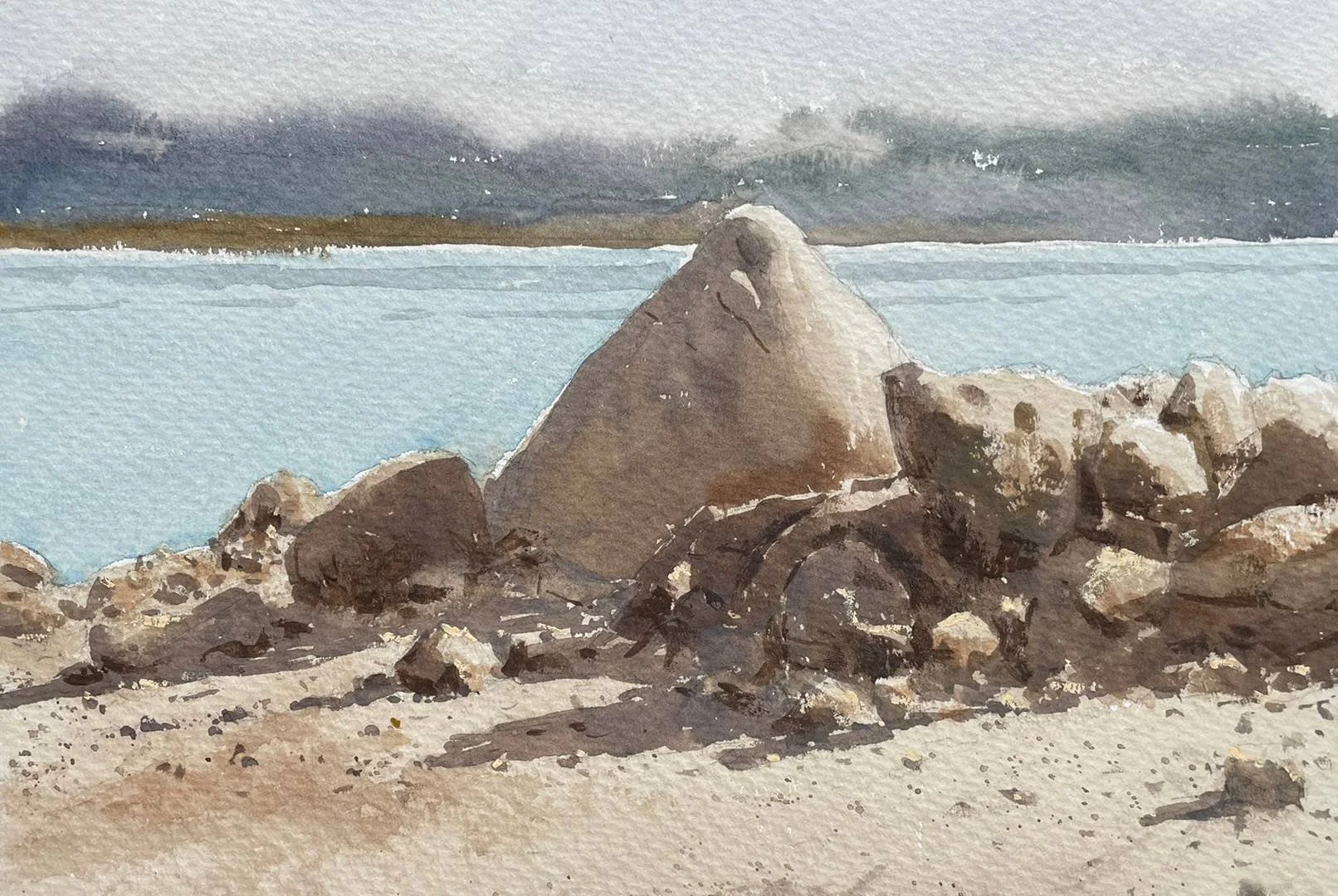
A few weeks ago, I was on the rocky, northern California coast painting coastal scenes from life. There were some days where I’d spend a long time driving or hiking just to find a good painting spot. Once I finally found a spot, I'd set up the painting gear, sketch out the scene, and spend a couple of hours painting just to end up with something disappointing.
Other times, I'd find a spot immediately, paint from my car, away from the cold ocean wind, and it'd end up being one of my best paintings that would sell a couple days later.
It's too easy to beat ourselves up over an unwanted outcome when we create art. As artists, we're thinkers. We feel deeply. We care deeply. We're sensitive to nuances and detail. And we notice things others don’t. This sensitivity is a gift which helps us to create art but if not used correctly, this gift can easily become a curse that damages our own minds.
The Emotional Cycle of Creative Disappointment
Think back to a time when you were disappointed with your work. What kind of thoughts and emotions did you experience?
If you're like me, you probably felt that you weren't good enough. You put yourself down. You tied your self-worth to the thing you created.
Or maybe when someone critiqued your work and gave feedback, you felt personally attacked, rather than separating yourself from the artwork.
When we create art, we put so much of ourselves into the work. And this is actually great for our art. But when the outcome of all the effort turns out ugly or not what we envisioned, we feel like failures. Or we feel like what we did was a complete waste of time.
But the truth is that: we aren't failures.
And we didn't waste any time.
The reason is because the process of creating art is what matters. It's what we can control.
You Can't Control the Outcome
I'm a big fan of stoic philosophy and one of the major points is to focus only on what you can control in your life. This is how you avoid being a victim and simply live a happier life because you're not wasting your time complaining about things out of your control.
And I believe that we are not in control of the outcome of our art.
It's sounds crazy at first, but when you think about it more, it begins to make sense. Because if we were in control of the outcome, then we would choose to make a masterpiece every single time we make art. But the reality is that doesn't happen. No matter how hard we try to create a masterpiece, we usually don't get one.
If mastery was a matter of effort alone, we’d all be making masterpieces every time we picked up a brush or a pencil.
So, the only thing we can control to some extent is the process and how we think about our art. We control how we respond to the outcome of our efforts.
I would argue that creating a bad or boring piece of art isn't a waste of time but spending your time and energy feeling disappointed about it: that's actually a waste of time.
So what can you do instead?
Process Over Perfection
When a piece doesn’t turn out well, you have four choices:
Stay disappointed and stuck
Try to fix what’s fixable
Start over with a clearer approach
Let it go and move on with new insight
3 out of 4 of these options are productive and are focused on taking action. It should be quite obvious by now which one is unproductive. But even with it being so obvious in that list, how many times do we focus all of our attention on being upset or disappointed about the art we make, rather than doing something more productive?
The choice is always in your hands. I'm not saying that you'll never feel disappointed or upset about your art. We are human and have emotions at the end of the day.
It's okay to feel a certain way. But the point is to become aware of these emotions and understand that we shouldn't let these emotions drive our actions.
Instead of sitting around upset all day, acknowledge your feelings, accept the reality, and try your best to take action that will move your forward.
The process of making art is where all the magic happens.
It's in the process that we enter the flow state. We lose track of time and enter a different reality. We forget about all of our stresses and daily life and focus on what we're making.
The final result doesn't give us any of these experiences. This focus or obsession with perfection destroys the passion and magic of the process.
It's in the process where you will find freedom and connection to something greater.
Fighting the Field vs. Flowing with It
I recently read an interesting book from the 70s called The One-Straw Revolution by Masanobu Fukuoka. In this book, he writes about how most modern farming tries to dominate and control nature.
And it's still true today, probably even more so. We're stripping the soil of nutrients, forcing productivity, and using chemicals like pesticides, herbicides, and fertilizers to manipulate plant growth.
But he believed the better way was to align with nature's patterns instead of forcing results. He didn't plow his fields. He used no chemical fertilizers. He just trusted in the natural system of nature's interconnectedness.
The cool thing is that his crops were more productive and had higher yields with way less work than conventional farming and all their fancy tools and science.
So as I was reading this book, I thought: maybe it’s the same with creativity too.
When I try to force a result or overwork a painting, it often backfires. Most of my best paintings happened without force or struggle. Without expectations.
When I just let the work flow and trust the process, even if it’s imperfect, my work feels more alive and spontaneous.
I think creativity is no different than nature. It thrives when we stop trying to control it. When we let go of the outcome and instead learn to observe, respond, and create in the moment.
Beyond the Outcome
Now thinking about everything I've said so far, let's bring it back to disappointment and having an identity as an artist.
Think about who you are without the outcome. Without creating a good piece of art.
Who are you when the art doesn’t turn out well?
Who are you without a 'good' result?
What if your identity as an artist has nothing to do with how good your last piece of art was?
I think creating art isn't about keeping score. Although, I have counted my good vs. bad paintings in the past haha. But really, it's not about that, right?
It's about being in tune with what drives you to create. Whether it's nature or humans or just pure interest and passion for a particular subject or topic.
It's about falling in the love with the process of making whatever it is that you make.
Feeling a sense of fulfillment. Being able to express yourself and put your vision and ideas into the world as something physical.
All of those things are separate from the outcome. They're found in the process. In the imperfections of everything we create.
So the next time you make something and feel disappointed, ask yourself:
Does it really matter that this piece of art didn't turn out well?
In the grand scheme of being an artist, I don't think it matters that much. There's always more to learn and more to create. These 'failed' pieces help to feed the next ones you make. They're like the compost for your future growth. And just like nature, growth happens slowly and when the conditions are right.
Focus on what you can control:
Your courage
Your curiosity
Your attitude
The process
Your willingness to keep creating, even when the outcome lets you down
Hope you found something useful in this newsletter.
Thanks for reading.
Brandon Schaefer
I’m an artist exploring creativity, mindset, and the practice of making art over a lifetime. I share my work through writing, courses, and original paintings.
